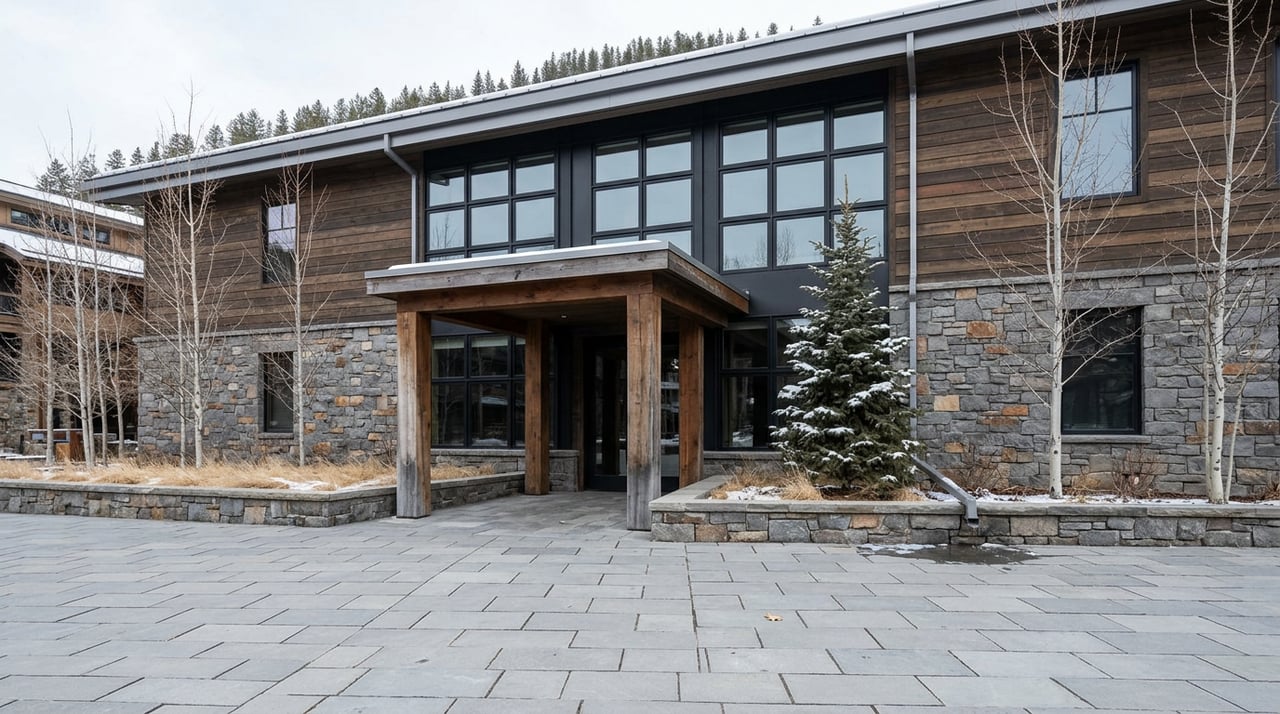
Stand in the sales gallery above Cormont's plaza level and someone will eventually turn a screen toward you. It shows unit counts, availability, a column that says "under contract" next to a number that looks reassuringly large. It can be tempting to read this much interest, this fast, as proof.
That isn't proof. Not yet. And understanding why is the difference between reading a Deer Valley East Village pre-construction listing correctly and mistaking that interest for proof of value.
Pending Is a Sentence That Hasn't Finished
As of spring 2026, Cormont, the largest residential project planned for the village with roughly 350 fully furnished units spread across five towers, had 83 units listed on the Park City MLS. Most of those were already under contract. None had closed. That's not a gap in the data. It's the honest state of a building that's still being built, financially as much as physically. The reservation and contract activity tells you what buyers are willing to sign up for. It doesn't yet tell you what the market will actually pay, because no arms-length closing has happened to set that number.
Zoom out to the village as a whole and the pattern holds. MLS data for the broader Deer Valley East Village area, pulled in October 2025, showed 139 pending sales against only 74 closed. Sale-to-list price ratios were running close to full ask, and roughly 90 percent of released inventory went under contract within 30 days. That's a market where demand is real and buyers are moving fast on new releases. It's also a market where the number everyone quotes, pending sales, isn't the number that proves value. Closed sales are. And closed sales are still thin.
This matters for a specific reason: once Cormont, Four Seasons, and the rest of the pipeline start closing at real scale, the area's median price is likely to move. That won't necessarily mean the whole market appreciated overnight. It may simply mean that higher-priced, newly delivered product started trading and pulling the average with it. Anyone comparing today's pre-sale pricing to tomorrow's closed comps needs to hold that distinction, because they're not always describing the same phenomenon.
Four Projects, Different Stages of Proof
Not every East Village address sits in the same place on this timeline, and lumping them together is where a lot of the confusion starts.
| Project | Developer / Design Team | Planned Residences | Status as of Summer 2026 |
|---|---|---|---|
| Grand Hyatt Deer Valley Residences | Hyatt | 55 | Open and operating since Thanksgiving 2024 |
| Four Seasons Private Residences Deer Valley | Extell | 123 (55 in Tower B, 68 in Tower C) | More than 40% sold as of December 2025; foundations and garage levels under construction, no closings yet |
| Cormont | REEF Capital Partners | Roughly 350 across five towers | 83 units listed, mostly under contract, zero closings recorded; Tower 1's roof structure topped off in July 2026 |
| Marcella Landing | Olson Kundig design team | About 50 | Construction underway since fall 2024 |
Grand Hyatt is the only address in this table with actual closed transactions behind it. Everything else is priced on a mix of developer materials, MLS pending activity, and the market's collective bet on how the larger expansion plays out. That's not a criticism of the projects. It's a fact about the stage of the market you're buying into, and it should change how much weight you put on any single number a sales gallery hands you.
Who's Actually Representing You in That Room
At Cormont, the developer's listing agent is Sheila Hall, working through Summit Sotheby's International Realty. That's public information, and it's worth sitting with for a moment: the person staffing the sales gallery works for the seller. Their job is to get the developer's units sold at the developer's price, on the developer's timeline. That's not a flaw in the arrangement. It's simply how new construction sales are structured almost everywhere, and it's exactly why buyers in this market typically bring their own representation to the table, often at no added cost, since many developers cover the buyer's agent through a standard brokerage agreement.
The point isn't suspicion. It's clarity about incentives. A buyer can clarify the representation and compensation arrangements before deciding whether to seek independent representation.
A Reservation Isn't a Contract
Before a Park City pre-construction buyer signs a binding purchase agreement, they typically sign something else first: a reservation of interest. It's worth reading one closely, because the language is more provisional than the word "reservation" suggests. A publicly posted reservation agreement for another Park City project lays out terms that are fairly standard across this segment of the market:
- The reservation is explicitly nonbinding and can be terminated at any time, for any reason or no reason, by either the buyer or the developer.
- The buyer's deposit is held by a neutral escrow agent and only becomes part of a real transaction once an actual purchase contract is signed.
- The agreement acknowledges that the project itself carries development contingencies, meaning government approvals, construction financing, and contractor agreements the developer hasn't necessarily locked in yet.
- If the reservation isn't accepted or converts to a contract, the deposit is typically returned within seven calendar days.
None of this is unusual, and none of it should be alarming on its own. But it means the excitement of "getting in early" is often built on a document either side can walk away from. The real commitment, and the real risk transfer, happens later, when the actual purchase contract is signed.
Costs to Review Before Signing
New construction in this segment can involve fees that buyers should review as part of the contract process. At Cormont, for example, ownership comes with a 1.25 percent community reinvestment fee paid at resale, plus an additional 0.25 percent fee to the Cormont HOA. Fees like these are common in master-planned resort communities, but the exact structure varies project to project, and it's the kind of detail that belongs in your due diligence checklist rather than a surprise at your first resale.
East Village also sits within the footprint of the Utah Military Installation Development Authority, known locally as MIDA, which oversees infrastructure investment for roads, utilities, and community amenities across the expansion. That structure has real implications for how infrastructure gets funded and how costs get allocated over time, and it's worth understanding before you're several deposits deep.
Then there's pricing itself. Developers here have generally released inventory in phases, and with roughly 90 percent of each release absorbed within 30 days, later phases have tended to carry higher price tags than earlier ones. That's the mechanism behind the "get in early" pitch, and it's not wrong. But it's a different argument than "this number is proven." Early pricing reflects confidence in a future outcome. Proven pricing comes from closings that haven't happened yet at most of these addresses.
Before You Wire Anything
A short list worth working through with independent counsel and your own agent before a deposit leaves your account:
- Get the deposit refund terms in writing, and understand exactly which document, reservation or purchase contract, actually binds you.
- Request the current HOA budget, reserves, and insurance structure rather than relying on projected numbers.
- Confirm the community reinvestment fee, transfer fee, and any rental program costs, in writing, from the HOA documents rather than a sales sheet.
- Ask what happens if the delivery date slips. Who carries the cost of that delay, and is it addressed in the contract or left silent.
- Bring your own buyer's agent from the first phone call, not after you've already toured the model unit and started picturing your ski season there.
A Few Questions Worth Asking Directly
Does "under contract" mean the price is settled? No. It means a buyer has agreed to a price, but the sale hasn't closed. Proven pricing comes from closed sales, and at several East Village addresses, those don't exist yet.
Can I use my own agent even if I'm buying from an on-site sales gallery? Yes, and it typically costs you nothing extra. The developer generally compensates the buyer's agent separately from the listing agent, who represents the seller.
When will Deer Valley East Village pricing actually be proven? Piece by piece. Grand Hyatt already has closed sales behind it. Cormont's first residents are expected in 2027, which is roughly when its pricing will start to be tested by real transactions rather than reservation activity. Four Seasons sits somewhere in between, more than 40 percent sold as of December 2025 but still under construction at the foundation level.
Buying into a village before it fully exists isn't a mistake. It's a specific kind of decision, one that rewards buyers who read the paperwork as carefully as they read the view. If you're weighing a reservation at Deer Valley East Village, or trying to figure out which stage of this pipeline actually matches your timeline and risk tolerance, I'd welcome the conversation. Let's Connect.
This article is general information, not legal, tax or financial advice. Consult a qualified professional about your situation.